Visualizations
See the mathematics move
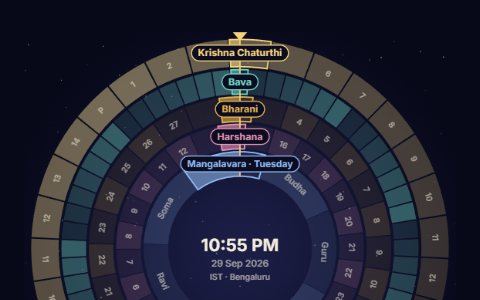 The five-angle clockFive rings turn live: each limb is an angle divided by its span.
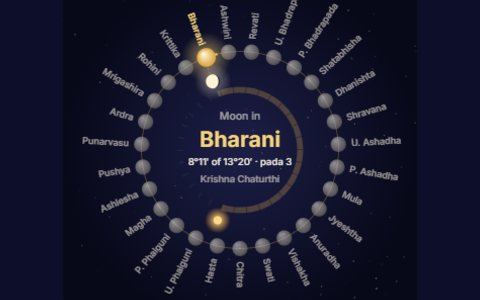 The Moon’s necklace27 beads of 13°20′ and the live Moon. Tap a bead.
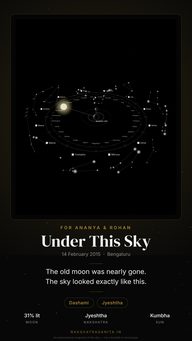
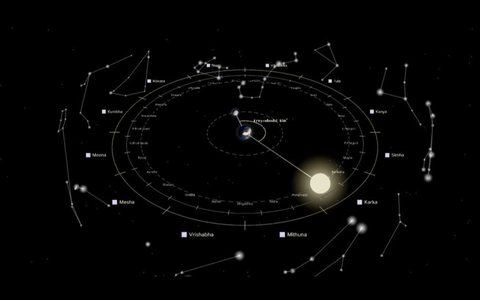 Living SkyConstellations from real star positions. Scrub time and watch each tithi form.
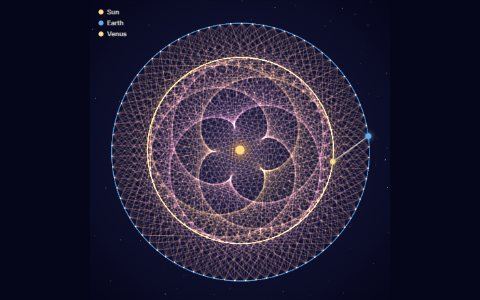 The Venus rose8 Earth years ≈ 13 Venus years: a five-petalled rose.
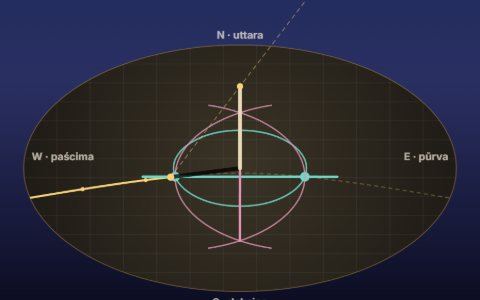 The shadow stickLatitude = arctan(equinox noon shadow ÷ 12). Try your city.
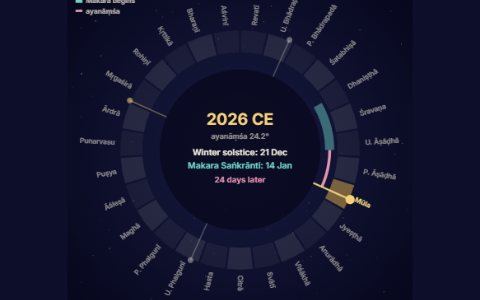 The slow wobble50.3″ a year, one turn in 25,800 years: why Sankranti drifts.
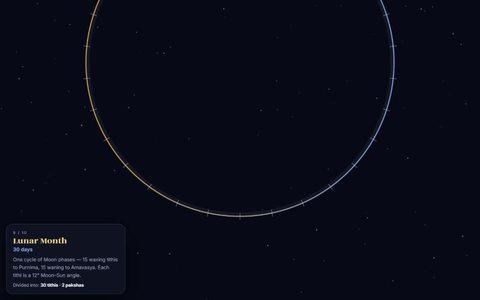 Wheels of TimeThe calendar’s cycles, from one day out to a whole yuga, in one zoom.
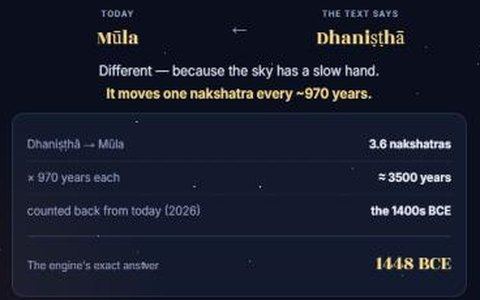 The oldest sky, recomputedWhere the Vedanga Jyotisha put the solstice, worked out again with the engine.
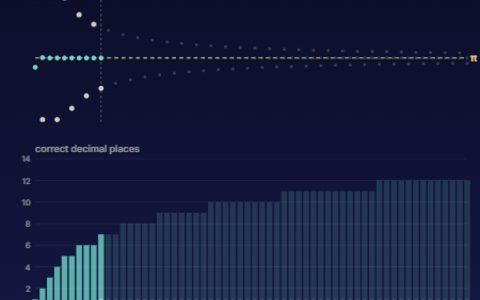 Architects of the skyAryabhata to Madhava: six astronomers, and a calculation of each one’s to try.